How the work moves

From the first enquiry to the money landing.

Five stages, in the order they happen. Each one hands its work to the next, so the stage after it starts with something rather than nothing.

  1. 01

    Quote

    Build the proposal from your service catalogue so the prices are the ones you meant to charge. The customer signs it in the browser, the signed copy files itself against their record, and the deal moves without anybody dragging a card.

    Hands on
    A signed deal, priced from the catalogue.
  2. 02

    Schedule and dispatch

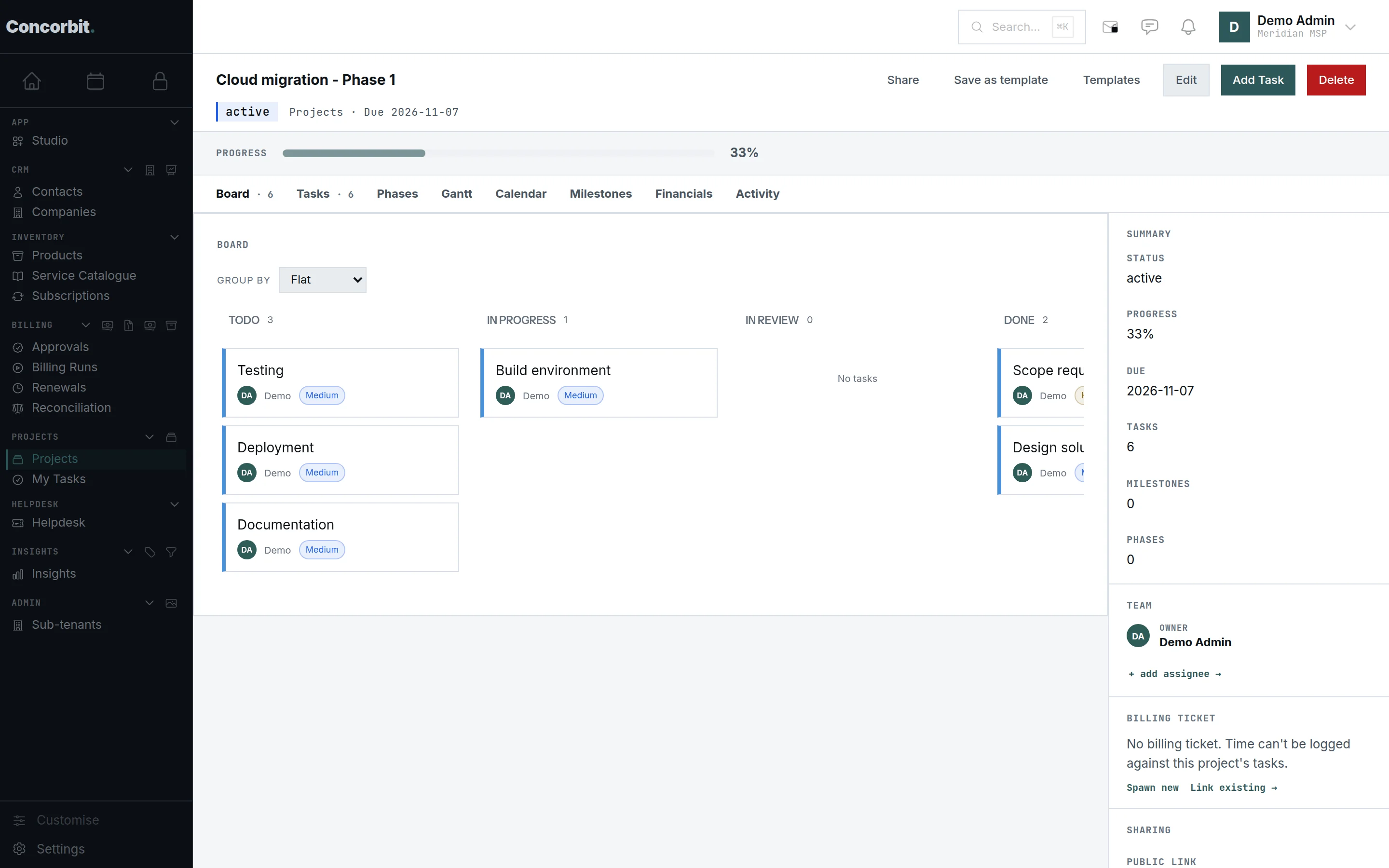
    Plan the round on a drag-and-drop board. The engineer opens their phone and finds the address, what has gone wrong there before, and the form they are supposed to fill in. They sign the job off on site and it comes back ready to invoice.
    Hands on
    A booked job with a form attached.
  3. 03

    Support and resolve

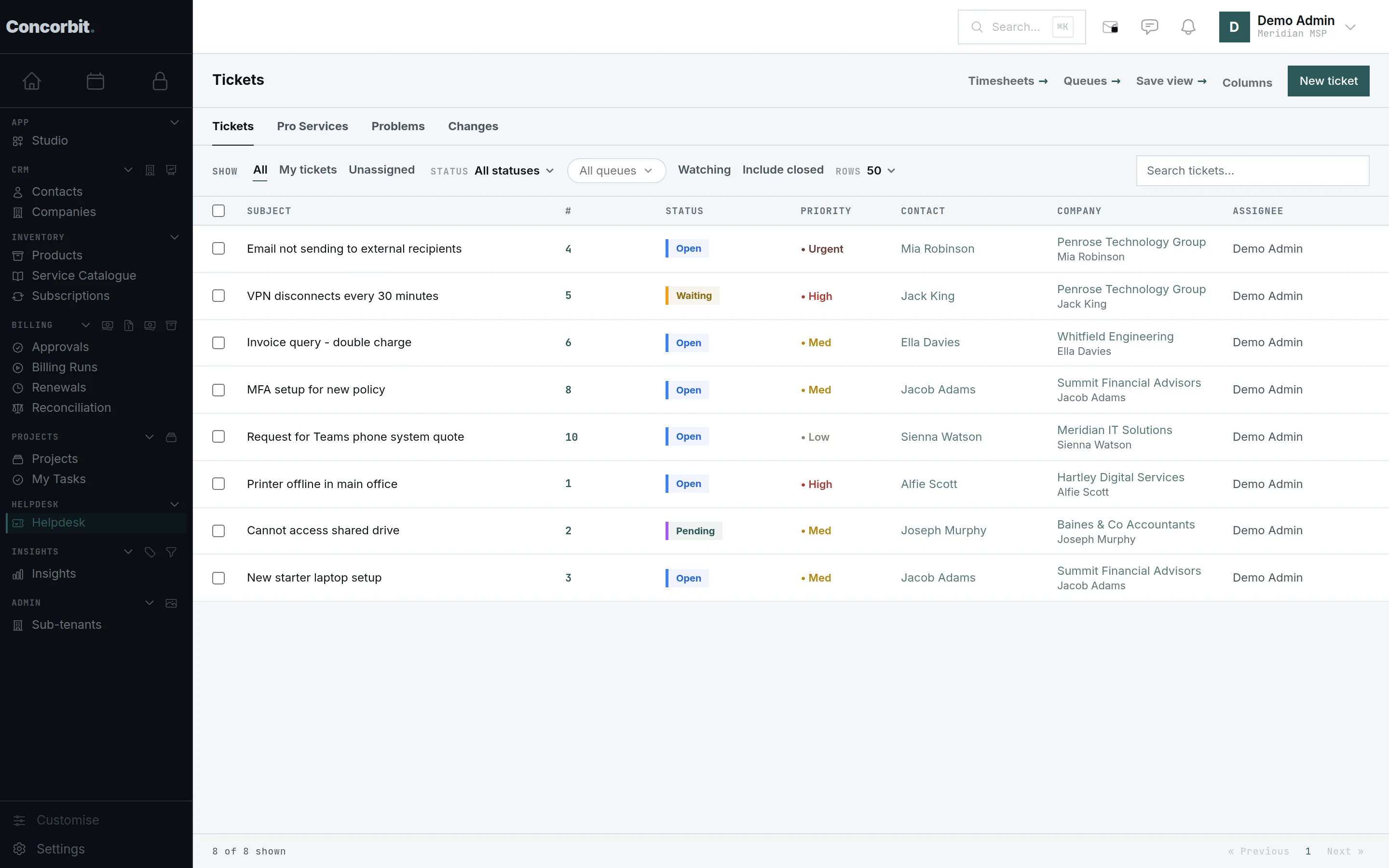
    Tickets arrive by email or through the portal and land in queues you have defined. Statuses are yours to name and to give behaviour to. The SLA clock stops while you are waiting on the customer, and starts again when they reply.
    Hands on
    Logged time against a contract.
  4. 04

    Invoice and get paid

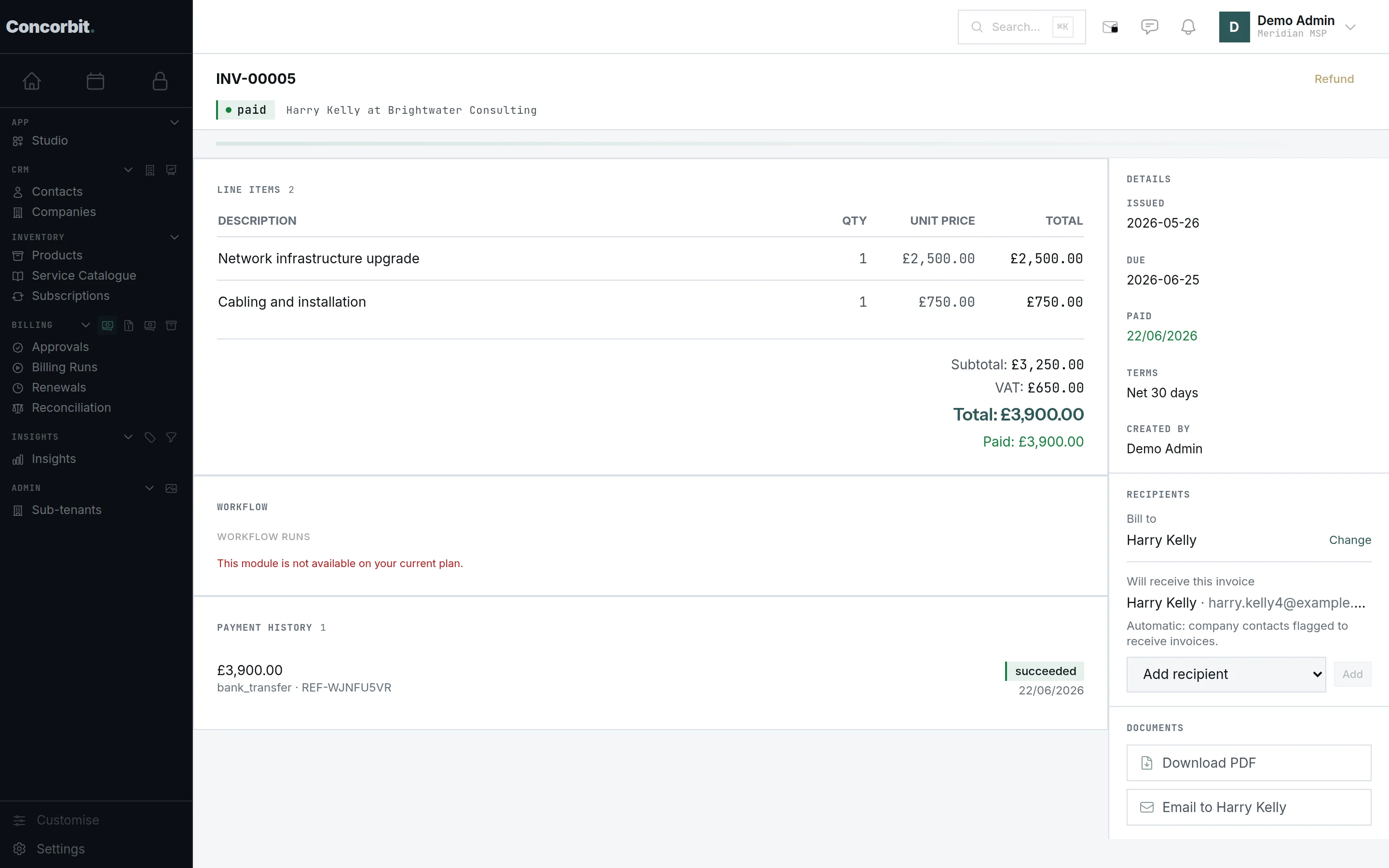
    The costs are already on the job, so the invoice is mostly written before you open it. Send it, take payment by card or bank through Stripe, and let the unpaid ones chase themselves. Retainers bill on the day you set and tell you when the hours are nearly gone.
    Hands on
    A paid invoice and a real cost.
  5. 05

    See where you are

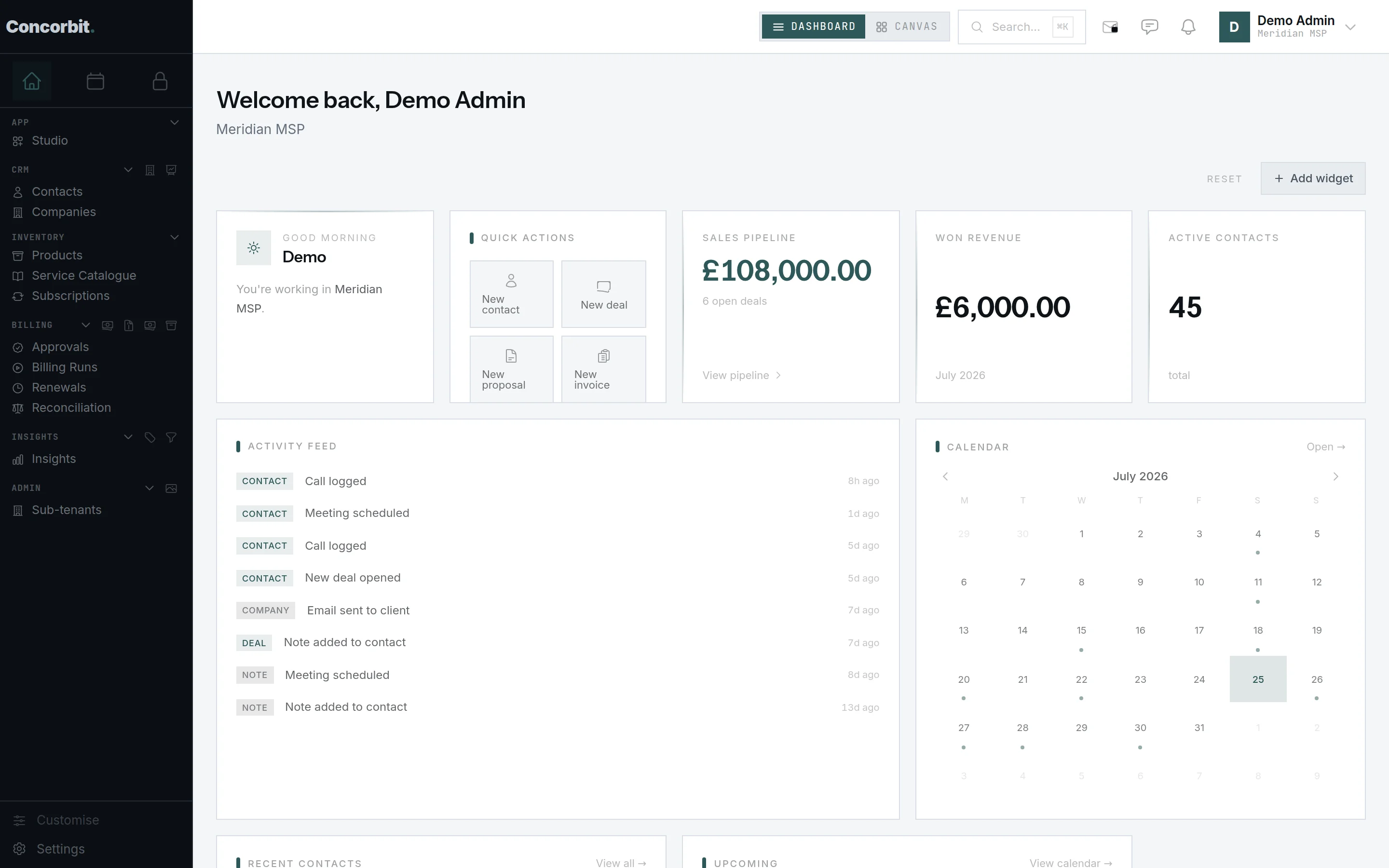
    One date range across the helpdesk, jobs, billing, SLA and customer satisfaction at once. The margin is calculated from the same costs you invoiced, so the reports and the bank account tend to agree.
    Hands on
    A margin figure you can click into.

All five stages are looking at the same record.

There is no nightly sync and no integration to break at the weekend. A customer's address exists once. So does their contract, their credentials and every invoice you have ever sent them.

The Concorbit dashboard, showing sales pipeline value, won revenue, active contacts and recent activity for a managed IT services business

It goes out under your brand

The documents that leave the platform are yours, not ours. A document theme sets your colours, your type and your cover treatment once, and proposals and invoice PDFs render from it: the page your customer reads, the PDF they download and the copy they sign are one design.

When a document goes out, its appearance is frozen with it. Redesign the theme next month and the documents your customers already hold keep the look they went out with.

Send yourself a proposal, change the theme, and open the proposal again.

Rules for the boring parts.

Workflows do the things you would otherwise remember to do: chase the unsigned proposal, warn you at eighty per cent of a retainer, put the right engineer on the right kind of job. Every run is logged, so when something odd happens you can read what it did and why.

It talks to what you already run.

Autotask connects while you migrate. Microsoft 365 handles identity and mail. The figures go to QuickBooks or Xero, and Stripe takes the money. Unifi, Psono and BookStack connect for the teams that already run them. If you leave, you take an export with you from settings without asking us first.

Bring a job you lost money on and we will run it through.